
What to Expect: The Driveway Resurfacing Process, Start to Finish
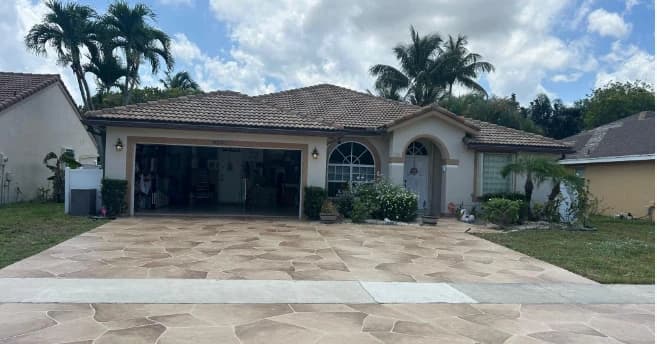
Most homeowners know driveway resurfacing is faster and cheaper than tearing out and repouring a slab. What's less clear is what actually happens once a crew shows up — how the old surface gets prepped, how the new finish is applied, and how long you'll need to stay off it. Here's the real step-by-step process, based on how we handle driveway resurfacing projects across Naples and Southwest Florida.
Step One: Pressure Washing and Surface Prep
Every resurfacing job starts with a deep clean. We use professional-grade pressure washing equipment to strip away years of dirt, oil stains, mold, mildew, and algae — the kind of buildup that's common on Florida driveways sitting under humidity and tree cover. This step isn't cosmetic. Overlay materials need to bond directly to the concrete underneath, and any residue left behind becomes a weak point that can cause peeling or delamination down the road.
Once the surface is clean, we inspect for structural issues — settling, drainage problems, or slabs with movement — that need to be addressed before any overlay goes down.
Step Two: Crack Repair and Patching
Cracks, chips, and spalled areas get filled and leveled before resurfacing begins. This is why resurfacing works so well on driveways that look rough — the overlay doesn't just sit on top of damage, it corrects the surface first. Minor cracks are routed and filled; larger structural cracks are addressed so they don't telegraph through the new finish over time.
Step Three: Applying the Decorative Overlay
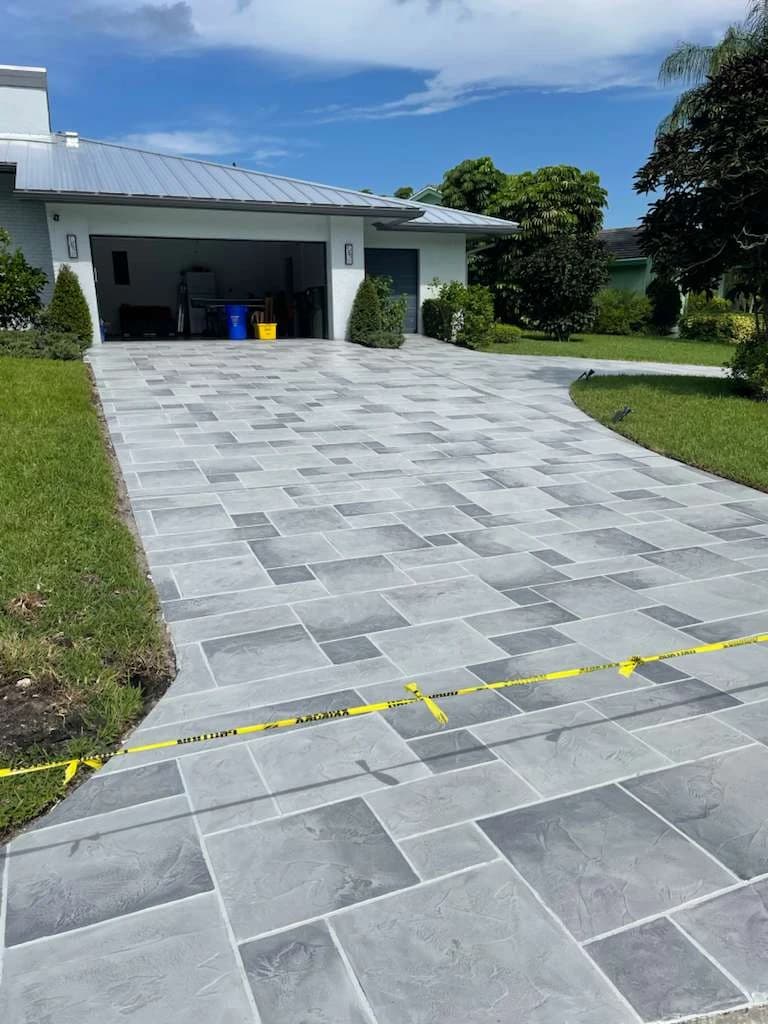
This is where the transformation happens. A thin, polymer-modified overlay is applied directly over the existing concrete — no demolition, no jackhammering, no hauling away old slab. Depending on the look you've chosen, this stage includes:
Base color coat: hand-applied or sprayed to establish the primary tone across the driveway.
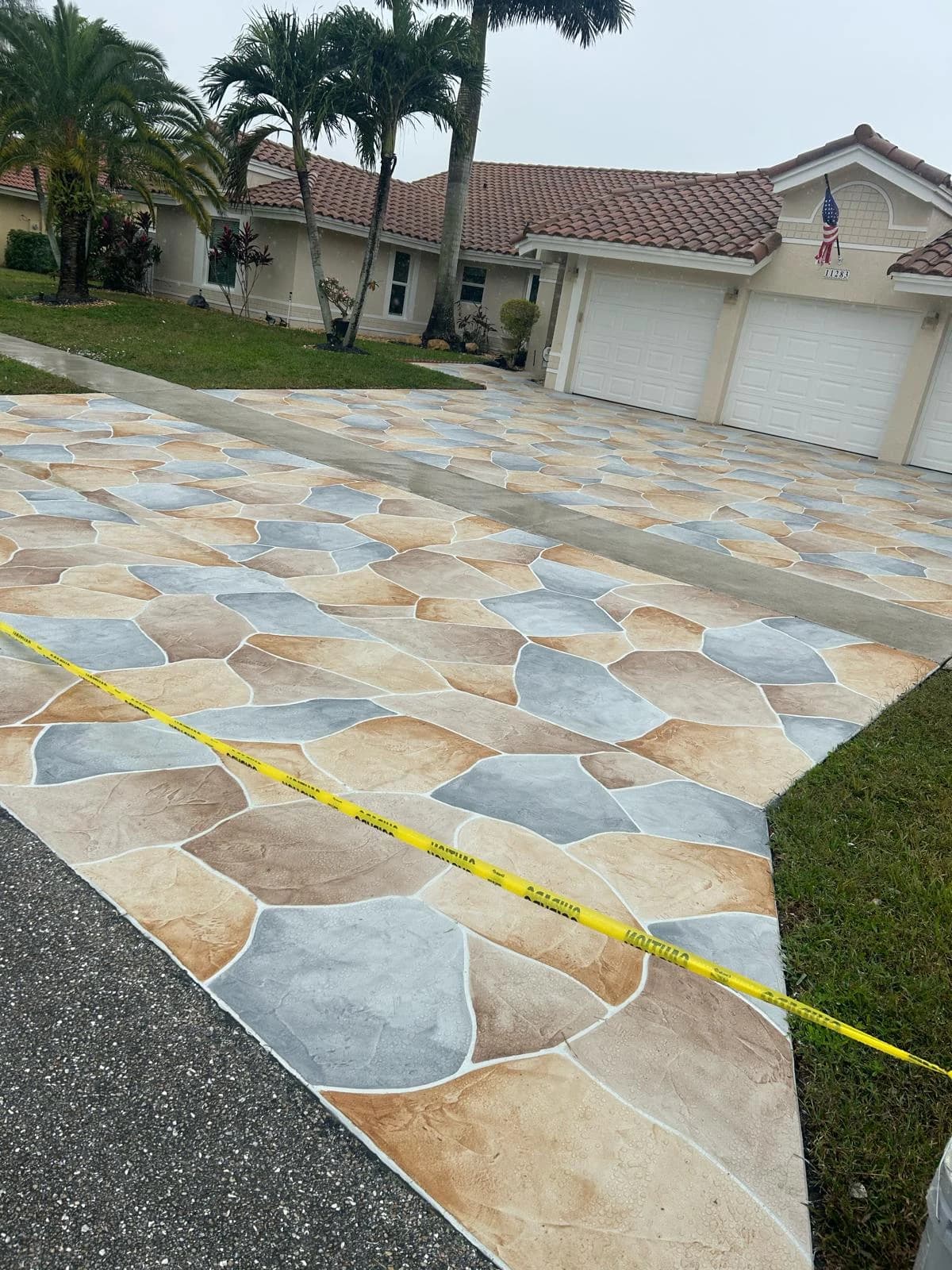
Stamping: for flagstone, brick, cobblestone, or tile-look patterns, detailed stamps are pressed into the overlay while it's still workable.
Scoring or texturing: for cleaner, more contemporary finishes without a stamped pattern.
Every material we use is formulated for Florida's climate — UV-stable and engineered to handle thermal expansion so the finish doesn't crack or blister as it heats and cools throughout the day.
Step Four: Sealing the Surface
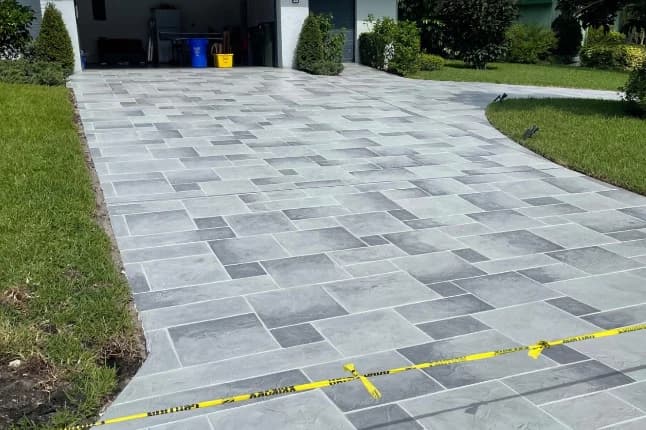
Once the overlay and any coloring or antiquing steps are complete, a professional-grade sealer is applied. This creates an invisible protective barrier against UV fading, rain, oil, and everyday vehicle traffic. Sealed correctly, a resurfaced driveway holds its color and finish for years — and resealing every 2–3 years keeps it looking freshly done.
How Long Does It Actually Take?
- Most residential driveways: Completed in 1–2 days from pressure washing through the final sealed coat.
- Curing before foot traffic: Light foot traffic is typically safe after about 24 hours.
- Curing before vehicle traffic: We'll give you a specific timeline for your project — this is why fresh work is taped off, like the caution tape you see in the photos above.
- Larger or more detailed patterns: Multi-color stamped patterns with antiquing add time compared to a single solid-color finish.
Why This Process Beats a Full Tear-Out
A full driveway replacement means demolition, hauling, forming, pouring a new slab, and weeks of curing before it can handle traffic. Resurfacing skips almost all of that — you're working with the structurally sound concrete that's already there, which is faster, less disruptive, and a fraction of the cost.
It's also why resurfacing has become the default recommendation for driveways with surface-level cracking, staining, or an outdated finish — not structural failure. If your slab is sound underneath, there's rarely a reason to tear it out.
Ready to See It in Person?
Every driveway is different — slab condition, drainage, and the finish you want all affect the exact timeline. Concrete Magic has resurfaced driveways across Naples and Southwest Florida for over 19 years, and we walk every homeowner through the process before we start. Reach out for a free, no-obligation estimate.
Concrete Magic has served Naples, FL and Southwest Florida for over 19 years. Our team is licensed, insured, and specializes exclusively in decorative concrete surfaces — pool decks, driveways, patios, walkways, and interior floors.