
Multi-Tone Color Blending: Why Single-Color Slabs Are Being Left Behind
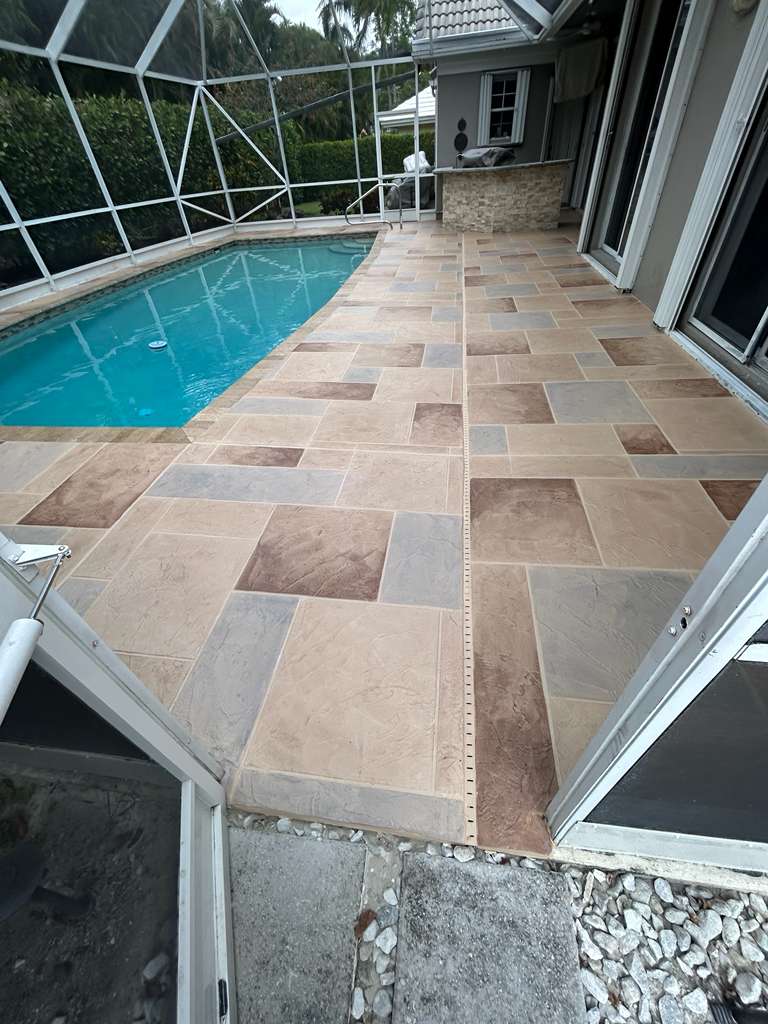
Walk into any decorative concrete showroom or scroll through recent project galleries and you'll notice something: the flat, uniform single-color slabs that defined concrete work twenty years ago are disappearing fast. In their place, homeowners are choosing surfaces that ripple with depth — warm ambers shading into cool grays, sandy tones bleeding into rich browns, light and shadow playing across stone-textured concrete as if the material itself grew there naturally.
This is multi-tone color blending, and it has fundamentally changed what's possible with decorative concrete. Here's what it is, how it works, and why Southwest Florida homeowners are choosing it for driveways, pool decks, and patios across Naples.
What Multi-Tone Color Blending Actually Means
Traditional concrete coloring uses a single integral pigment mixed uniformly into the material — one color, consistent across the entire surface. The result is predictable but flat. It reads as artificial because natural stone, slate, and flagstone are never one uniform shade.
Multi-tone coloring layers two, three, or more distinct color applications on top of each other to build depth and variation across the surface. A base coat establishes the dominant tone. Secondary accent colors are applied selectively — more heavily in recessed areas, lighter on raised edges — to create the impression of light catching natural stone. An antiquing release or tinted sealer can add a final layer that pools in texture grooves, darkening the joints and shadow lines the way age and weathering would on real stone.
The result looks like material that has been there for decades, not something installed last week. That visual authenticity is exactly why multi-tone work has become the dominant request at Concrete Magic.
The Layering Process: How Depth Gets Built
Multi-tone finishes are built in stages, each one adding a new dimension to the surface. Understanding the process helps explain why the results look so different from what flat-color work can achieve.
Base Color Coat
The primary color is mixed into the overlay material itself, creating a uniform foundation tone. This is the dominant hue you see across the majority of the surface — typically a warm sand, natural beige, or cool gray depending on the design palette.
Accent Color Application
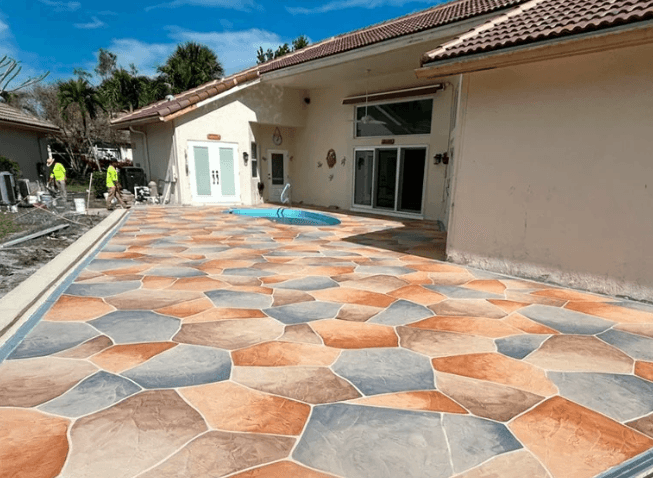
A second color — often a complementary tone or contrasting shade — is broadcast or wiped across the surface while the base is still workable. The accent settles into low points and texture recesses, creating natural-looking variation. On flagstone patterns, this might make some 'stones' appear lighter or darker than their neighbors, mimicking the tonal range of a real stone field.
Antiquing Release
In stamped overlay work, a powdered release agent is applied before the stamp presses into the material. This powder transfers selectively — landing on the raised texture peaks while allowing the base color to show through in recesses — creating an immediate multi-tone effect across every stamped surface.
Tinted Sealer
The final sealer can itself carry a subtle tint — often a transparent amber, gray wash, or dark antiquing tone that pools in grout lines and shadow areas. This final layer unifies the surface while deepening the impression of age and natural material.
Why Multi-Tone Looks More Natural
- No natural stone is one color: Real slate, flagstone, and travertine contain dozens of tonal variations — mimicking this requires layering, not blending a single pigment.
- Light reads differently on varied surfaces: Multi-tone surfaces catch light at different angles depending on color depth, creating the visual movement that makes stone look alive.
- Depth masks imperfections: Tonal variation draws the eye across the surface as a whole rather than focusing it on any individual area — minor surface variations disappear.
- Ages more gracefully: As the surface weathers slightly over years, multi-tone work continues to look intentional rather than worn.
Popular Multi-Tone Palettes for Florida Homes
The right palette depends on your home's exterior, the architecture, and how the surface interacts with Florida's intense sun. These are the combinations our Naples clients choose most often.
Warm Earth Blend — Sand, Amber, and Terracotta
The most popular palette in Southwest Florida. A sandy buff base with warm amber and burnt sienna accents creates the look of natural travertine or Arizona flagstone. Works beautifully on pool decks and patios, especially against Florida's tropical foliage. The warm tones complement stucco exteriors and tile roofs common throughout Naples and Marco Island.
Cool Gray Slate — Silver, Charcoal, and White
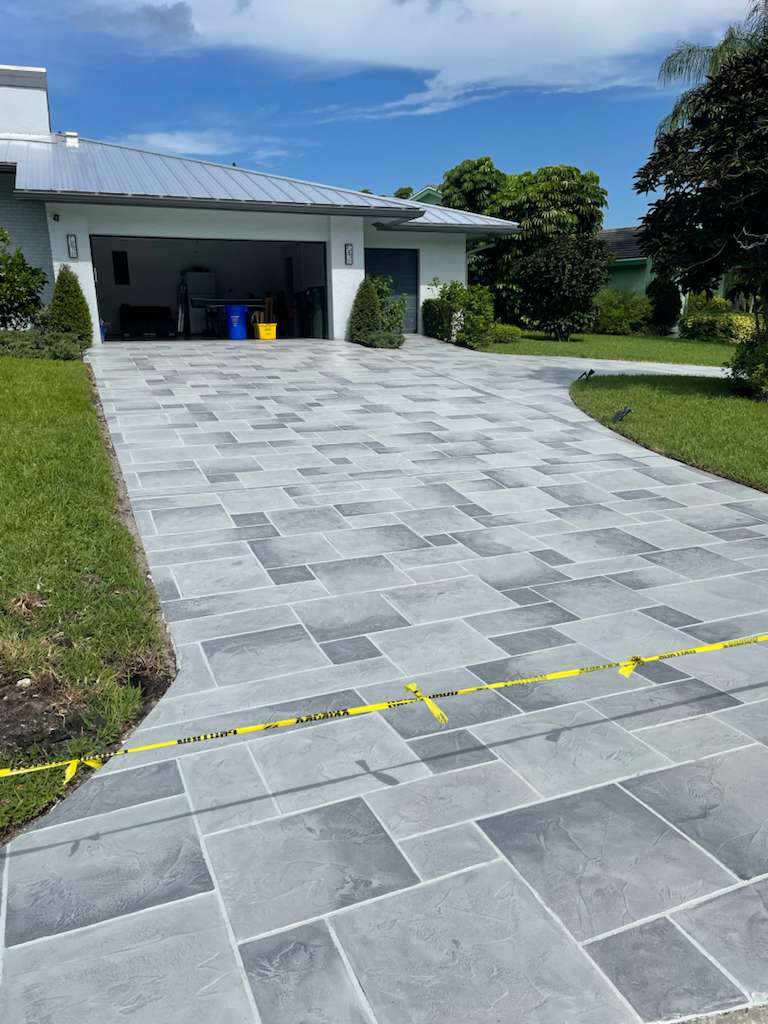
Contemporary homes lean toward cool palettes — silver-gray base with charcoal accents and bright white grout lines that give driveways a modern, almost porcelain tile appearance. This palette photographs exceptionally well, stays noticeably cooler underfoot than dark single-color work, and complements white, gray, and blue-tone exteriors.
Natural Stone Mix — Beige, Gray, and Brown
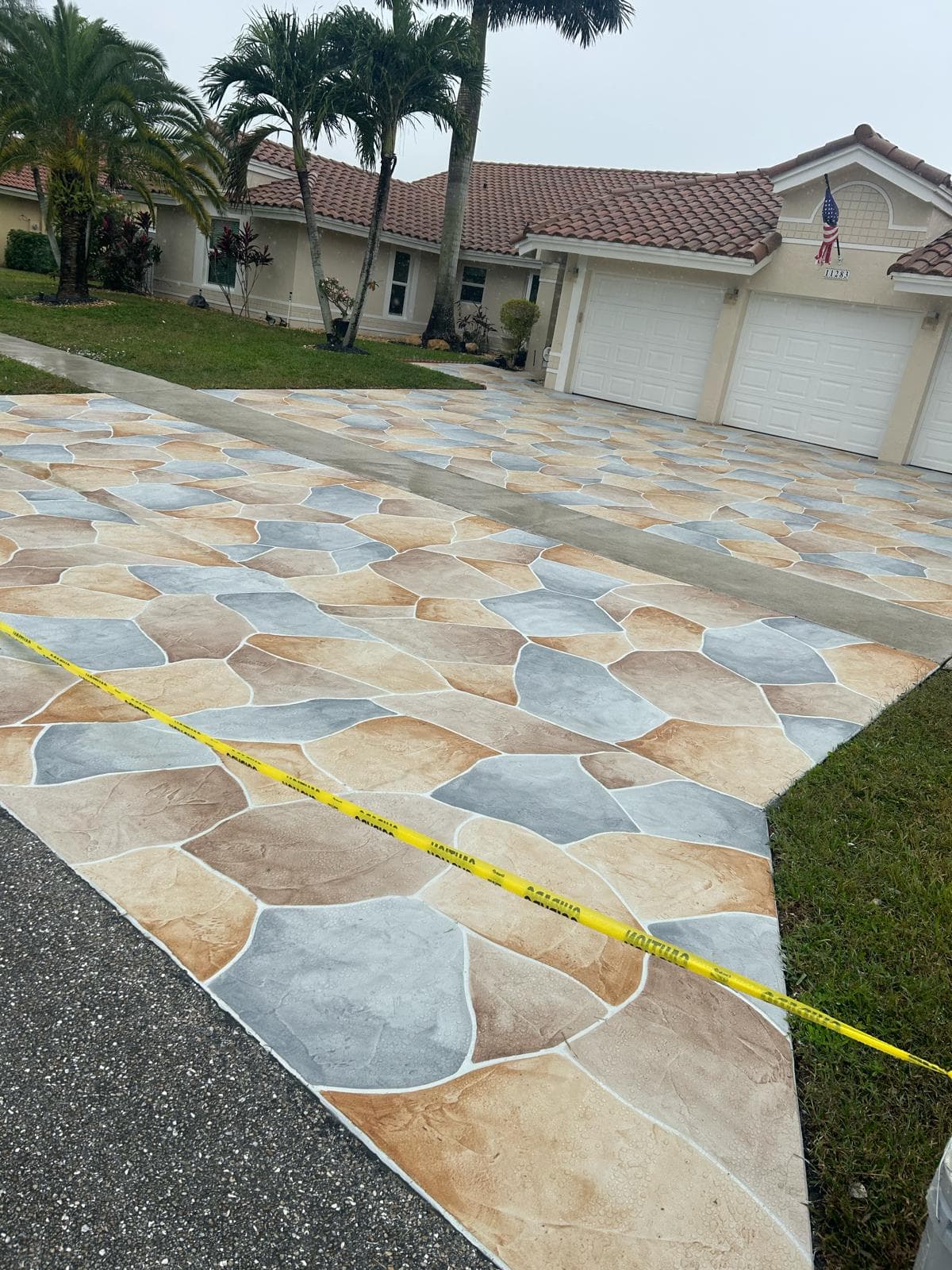
A versatile middle ground — neutral beige with gray and brown accent tones that reads as natural fieldstone or mixed-slate flagstone. This palette works on virtually any home exterior and ages beautifully in Florida sun without the high contrast that can look stark as a surface weathers.
Where Multi-Tone Blending Makes the Biggest Difference
Multi-tone coloring adds value to any concrete surface, but certain applications benefit most dramatically from the technique.
Driveways
The driveway is the largest single hardscape surface visible from the street. A multi-tone stamped driveway immediately elevates the entire exterior — the tonal variation across the surface area creates visual interest that a single-color pour simply cannot. On large driveways where an expanse of flat color would look monotonous, layered coloring breaks up the surface organically.
Pool Decks
Multi-tone pool deck work creates a resort-quality appearance that flat SprayDeck cannot match. Warm earth-tone blends pair especially well with the blue of pool water, creating the travertine-surround look that used to require actual stone installation. The tonal variation also helps mask the inevitable watermarks, mineral deposits, and foot traffic patterns that accumulate on pool surrounds over time.
Patios and Lanais
Covered and screened outdoor living spaces benefit from multi-tone work because the diffused light in these areas makes tonal variation in the floor more visible — subtle color depth that reads beautifully under a covered lanai becomes a key visual element rather than a background detail.
Multi-Tone vs. Single-Color: An Honest Comparison
Single-color work still has its place — some applications genuinely suit a clean, uniform finish. But for most residential projects, the comparison is straightforward.
| Factor | Single-Color | Multi-Tone Blend |
|---|---|---|
| Visual depth | Flat, uniform | Rich, layered, natural |
| Natural stone impression | Minimal | Strong — mimics real tonal variation |
| Hides wear over time | Poor — fading looks patchy | Better — variation blends wear in |
| Curb appeal impact | Moderate | High — immediately noticeable |
| Cost vs. single-color | Base cost | Modest premium for additional color steps |
| Best for | Simple pathways, utility areas | Driveways, pool decks, patios |
Choosing the Right Palette for Your Home
Color selection is the most consequential decision in a decorative concrete project — and the one homeowners most often want guidance on. At Concrete Magic, we bring color samples on-site to view against your home's exterior in actual Florida light conditions, rather than making decisions from printed swatches or indoor showroom lighting.
A few principles we've learned across 19 years and 2,500+ Southwest Florida projects:
Lighter is usually right for Florida. Lighter base colors stay significantly cooler underfoot in direct sun — a practical consideration for pool decks and barefoot traffic areas, not just an aesthetic one.
Match your roof and exterior. Warm terracotta tones work best with tile roofs; cool grays complement metal roofs and modern stucco; neutral earth blends are universally adaptable.
The accent color makes or breaks the effect. The dominant base color draws the first impression; the accent color creates the depth. Getting this pairing right — not too similar to look flat, not too contrasting to look artificial — is where experience matters.
View the samples wet and dry. Concrete color shifts dramatically when wet — sealed surfaces in Florida will be rained on regularly. See how your chosen palette looks in both states before committing.
The Shift Is Permanent
Multi-tone color blending has moved from premium upgrade to the expected standard in quality decorative concrete work. Homeowners who compare side-by-side samples rarely choose the flat option — the visual difference is immediate and significant. For Naples and Southwest Florida properties where outdoor living surfaces are a central part of the home, the investment in multi-layered color work pays off in curb appeal, resale value, and the daily satisfaction of a surface that genuinely looks like it belongs there.
Concrete Magic has served Naples, FL and Southwest Florida for over 19 years. Our team is licensed, insured, and specializes exclusively in decorative concrete surfaces — pool decks, driveways, patios, walkways, and interior floors.