
Stamped Concrete Durability & Lifespan: Built to Last 20–30 Years
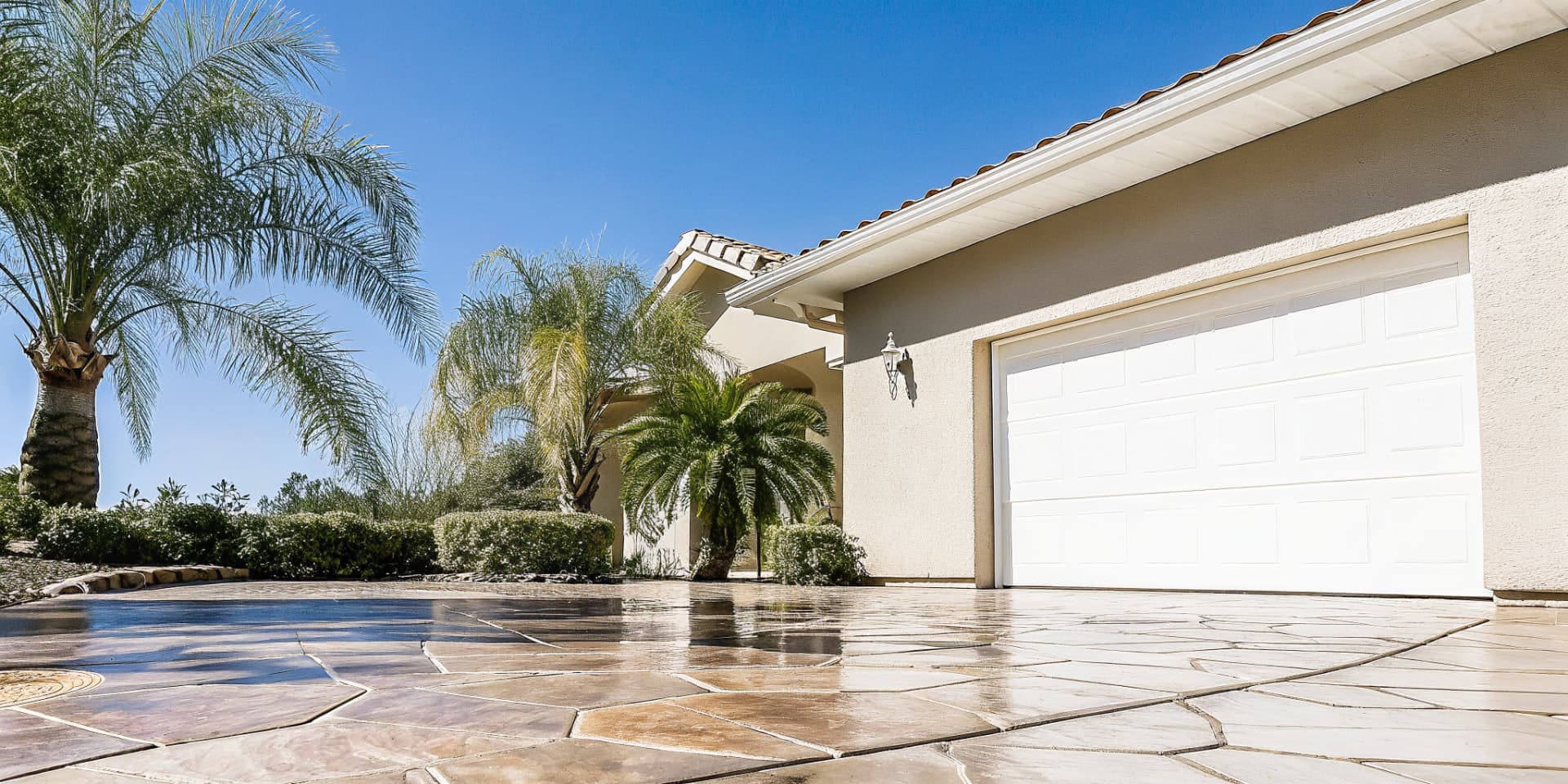
One of the most common questions we hear from homeowners considering stamped concrete is: How long will it last? The answer is straightforward: when properly installed and sealed, a stamped concrete surface lasts between 20 and 30 years — that's roughly two to three decades of beauty, durability, and minimal maintenance.
To understand why, you need to know what makes stamped concrete different from traditional pavers, real stone, and wood. And why those differences translate to real money saved over time.
Durability & Lifespan: 20–30 Years
A properly installed and sealed commercial stamped concrete surface lasts between 20 and 30 years. That's not a rough estimate — it's based on real-world performance across thousands of projects in Florida and beyond.
The key to reaching that 20–30-year lifespan is threefold:
- Professional installation: Proper substrate preparation, crack repair, and overlay application — not a DIY job.
- High-quality sealant: A commercial-grade sealer applied at installation and recoated every 2–3 years protects against UV fading, moisture, and staining.
- Florida climate protection: Our sealers are engineered for intense sun, humidity, chlorine (for pool decks), and salt air — not generic products.
Compare this to pavers, which shift and settle over 10–15 years, or wood, which rots within 5–10 years in Florida's moisture-rich climate. Stamped concrete simply outlasts them.
Low Maintenance: The Real Money Saver
Unlike individual pavers or real wood, stamped concrete does not shift, develop loose joints, or require intensive weed pulling. This is where the long-term savings really add up.
With pavers: You're dealing with settled sections that need re-leveling, weeds sprouting between joints, sand washing away, and individual pieces cracking or breaking. Over 20 years, that's hundreds of dollars in repairs and replacement work.
With real stone or travertine: Expensive material costs, freeze-thaw cracking in cold climates (and salt-air erosion in coastal Florida), grout deterioration, and constant sealing.
With stamped concrete: Annual or biennial pressure washing and a fresh sealer coat — that's it. No weeding, no leveling, no joint replacement. Occasional stain removal (for things like bird droppings or rust marks) takes minutes with the right cleaner.
For a typical 700-square-foot patio or driveway, annual maintenance costs roughly $150–300 for sealing. For pavers? $400–800+ annually once settling begins.
Safety Additives: Built-In Slip Resistance
Safety is a critical concern for pool decks, patios, and entryways — especially in Florida, where wet surfaces are common year-round. Slip-resistant grit can be mixed directly into the final sealer to significantly reduce slip-and-fall risks in wet or high-traffic areas.
How it works: During the sealing phase, we add fine grit particles (like silica sand) to the topcoat. The grit doesn't change the appearance much — it remains subtle — but it creates just enough surface texture to prevent slipping when wet.
Where it matters most:
- Pool decks: Barefoot swimmers moving from water to dry surface — slip resistance is essential.
- Entryways: Wet shoes entering a home, or rain-soaked pavers — grit prevents falls.
- Patios near water features: Fountains, spillways, or just morning dew can make surfaces slick.
This is one way stamped concrete outperforms polished stone or tile, which remain slippery when wet regardless of cost or premium finishes.
Stamped Concrete vs. Alternatives
Costs are estimates based on a typical 700-square-foot surface in Southwest Florida. Individual projects vary by condition, repairs needed, and material choices.
The Bottom Line: Maximum Life, Minimum Fuss
Stamped concrete is built for the long haul. With proper installation, regular sealing, and basic maintenance (pressure washing once a year), your surface stays beautiful, safe, and functional for two to three decades.
You get the look of high-end stone or pavers, the durability that pavers and wood can't match, and the minimal ongoing cost that makes it one of the smartest investments a Florida homeowner can make. Add slip-resistant grit to pool decks and entryways, and you've eliminated one of concrete's historic pain points: safety in wet conditions.
Concrete Magic has served Naples, FL and Southwest Florida for over 19 years. Our team specializes exclusively in decorative concrete surfaces — pool decks, driveways, patios, walkways, and interior floors — and every project is engineered for Florida's demanding climate.